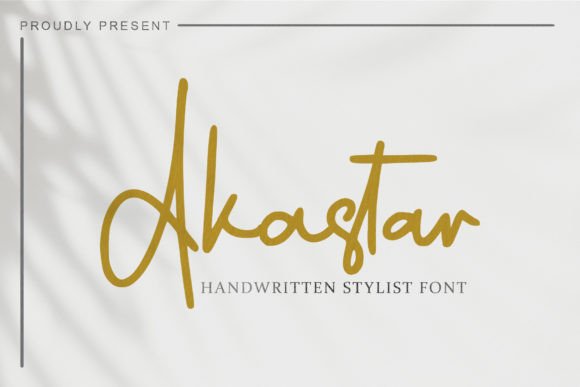
Akastar: A Handwritten Script Font for Elegant Web Design
Bringing Personality to Digital Typography
Akastar is a refined handwritten font that stands out in the crowded space of digital typography. Unlike sterile system fonts, Akastar carries the warmth of real handwriting while maintaining the clarity needed for web use. Its Script Amp style bridges the gap between casual elegance and professional design, making it a versatile choice for web designers building brand-focused digital experiences.
Creating Visual Hierarchy with Display Typography
As a display font, Akastar excels in header areas, hero sections, and key conversion points. The font’s natural flow guides the eye smoothly through short text elements like taglines, product names, and call-to-action buttons. When used at larger sizes on landing pages or portfolio sites, its organic texture adds visual interest without sacrificing readability. Designers can leverage Akastar to establish clear typographic hierarchy while reinforcing brand personality across digital touchpoints.
Where to Use Akastar in Web Design
- Hero section headlines that need expressive typography
- Logo text for creative brands and personal studios
- Feature highlights in product landing pages
- Handwritten accents in SaaS dashboards or app interfaces
- Header graphics for blog content sections
- Brand banners in online stores and e-commerce sites
Readability Considerations for Screen Use
While Akastar shines in display applications, web designers should consider its performance across screen sizes. At body text sizes, the font’s natural ligatures and swashes can reduce legibility, especially on mobile devices. Best practice suggests using Akastar for short phrases and headings rather than long-form content. When overlaying text on images or dark backgrounds, increase letter spacing and ensure sufficient contrast for optimal readability.
Brand Identity Through Font Personality
In the world of digital branding, typography plays a critical role in conveying brand tone. Akastar’s modern script style communicates creativity, approachability, and authenticity—qualities valued by boutique brands, creative professionals, and lifestyle businesses. When integrated into a brand’s digital toolkit, this handwritten font becomes a signature element that reinforces visual consistency across websites, social media graphics, and marketing materials.
Font Pairing Strategies
For balanced web layouts, pair Akastar with simpler typefaces that provide structure and contrast. A clean sans serif font works well for body text and navigation elements, allowing the decorative script to shine in header areas. Designers building editorial-style websites might combine Akastar with a classic serif font for subheadings, creating a layered typographic system that supports both visual appeal and content scannability.
Technical Considerations for Web Use
Before implementing Akastar in production environments, verify the font’s technical specifications. Check available styles, weights, and character sets to ensure multilingual support for international audiences. Confirm that webfont formats (WOFF, WOFF2) are included for optimal browser compatibility. Many modern script fonts include alternate characters and ligatures that add visual variety when used in logo text or prominent headlines.
Practical Implementation Tips
When using Akastar in conversion-focused layouts, test its performance across devices. On mobile screens, ensure touch targets maintain sufficient size when using decorative fonts in buttons. For dark mode implementations, test the font’s contrast against various background colors. Consider using font loading strategies to prevent layout shifts while maintaining fast perceived performance.
Commercial Licensing for Professional Use
For web designers and digital product creators, font licensing remains a critical consideration. When selecting Akastar for client websites, online stores, or template-based products, confirm that the font license covers commercial web use. Premium font providers often offer clear licensing terms that cover webfont deployment, ensuring legal compliance while protecting both designers and their clients.