Poraly: A Handwritten Font That Elevates Web Design With Personality
Testing Poraly in a Real Web Layout: A Hero Section Makeover
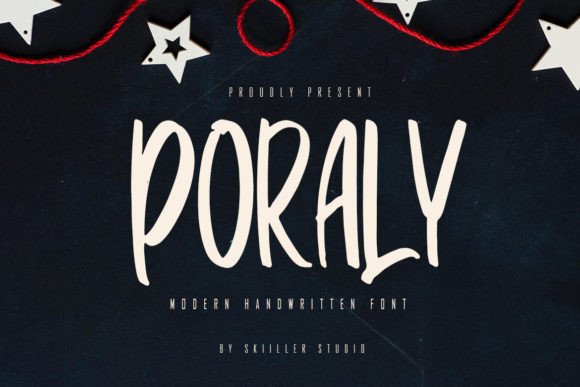
As a web designer working on a creative portfolio site, I needed a font that could instantly communicate personality and warmth in the hero section. I decided to test Poraly as the main headline font, overlaying it on a soft lifestyle image. The result was stunning—Poraly’s organic, handwritten charm brought a human touch that balanced beautifully with the clean, minimal layout underneath. It didn’t just look good; it felt intentional, inviting, and uniquely personal.
How Poraly Performs Across Digital Use Cases
After the initial success in the hero section, I expanded the test to other key areas of the site. I used Poraly for the call-to-action button on a course landing page, for the logo text of a coaching brand, and even as a decorative section divider on a blog redesign. Each time, the font held its own—its flowing lines and natural rhythm made it feel like a custom-drawn asset rather than a standard typeface.
On a boutique online store project, I used Poraly for product feature highlights and promotional banners. It added a boutique-like elegance that helped elevate the brand’s digital presence. The font’s versatility shone through in different digital environments, proving it’s not just a one-trick pony for headlines.
Readability and Responsiveness: What to Know Before You Use Poraly
While Poraly is visually striking, it’s important to use it thoughtfully. On mobile, I found that it works best at slightly larger sizes—especially in hero headers or callout sections. At smaller sizes, such as for form labels or navigation menus, the font’s decorative strokes can blur together, making it less readable.
I also tested it on dark and light backgrounds, and it performed well in both. The contrast was clear, and the texture of the strokes didn’t interfere with legibility as long as the font size and spacing were optimized. For image overlays, I adjusted the letter spacing slightly and added a light background overlay to ensure the text remained scannable.
Font Pairing Tips for Web Designers
One of the most enjoyable parts of using Poraly was experimenting with font pairings. Since it’s a handwritten script font, it naturally pairs well with clean, minimalist typefaces. I used it with a simple sans serif font like Open Sans for body copy and form elements, which created a strong visual hierarchy and kept the design grounded.
For a more editorial feel on a blog homepage, I paired Poraly with a classic serif font for subheadings. The contrast between the organic flow of Poraly and the structured elegance of the serif typeface added depth and sophistication to the layout. If you’re designing a bold landing page, pairing Poraly with a bold display font can create a powerful visual impact without overwhelming the user.
When Not to Use Poraly
Despite its many strengths, Poraly isn’t suited for every use case. It’s not ideal for long-form body copy or small interface elements like tooltips, dropdown menus, or data tables. The font’s decorative nature makes it better suited for display use—such as headlines, banners, and short branded statements.
I also noticed that in dashboards or admin interfaces where clarity and speed of reading are critical, Poraly’s personality can become a distraction. It’s best reserved for creative, brand-forward areas of a site where emotional appeal and visual storytelling are key.
Technical Considerations for Web Designers
Before implementing Poraly in a live project, I checked the available webfont formats and found that it includes WOFF and WOFF2, which are optimized for fast loading and broad browser support. The font also offers a range of alternates and ligatures, giving designers flexibility in how the text appears in different contexts.
For multilingual sites, I verified that Poraly includes basic multilingual support covering Western European languages. If you're designing for a global audience, be sure to check the full character set. Licensing was straightforward—Poraly is available with a commercial font license, making it safe to use in client projects, online stores, and digital templates.